A conservatory can be one of the brightest and most enjoyable rooms in a home during spring and summer. When the temperature drops, though, all that glass can make the same space feel noticeably colder than the rest of the house.
For homeowners in Glasgow, Bearsden, Edinburgh and across Central Scotland, that can mean a conservatory that is used less just when you would most like an extra comfortable living space.
One of the most practical ways to improve comfort without making major structural changes is to fit the right window and roof blinds. But do thermal conservatory blinds genuinely make a difference, and which type should you choose?
The short answer is yes: a well-fitted blind can add an extra insulating layer at the window and reduce heat loss. The size of the benefit depends on the blind, the glazing, the fit and how you use it.
Why Conservatories Feel So Cold in Winter
Conservatories have a much larger proportion of glass than an ordinary room. Glass is excellent for bringing daylight into the home, but it is also one of the places where heat can escape most easily.
Even with modern double glazing, the inside surface of a window can feel much colder than an insulated wall on a winter evening. A room with a glazed roof and several glazed walls therefore has a lot of surface area through which warmth can be lost.
That is why you may notice:
- the temperature dropping quickly after sunset
- cold areas beside windows
- draughts around older frames
- the heating having to work harder to maintain a comfortable temperature
Blinds do not replace proper glazing, roof insulation or draught-proofing, but they can help by creating an additional barrier between the warm room and the cold glass.
Do Thermal Blinds Really Keep Heat In?
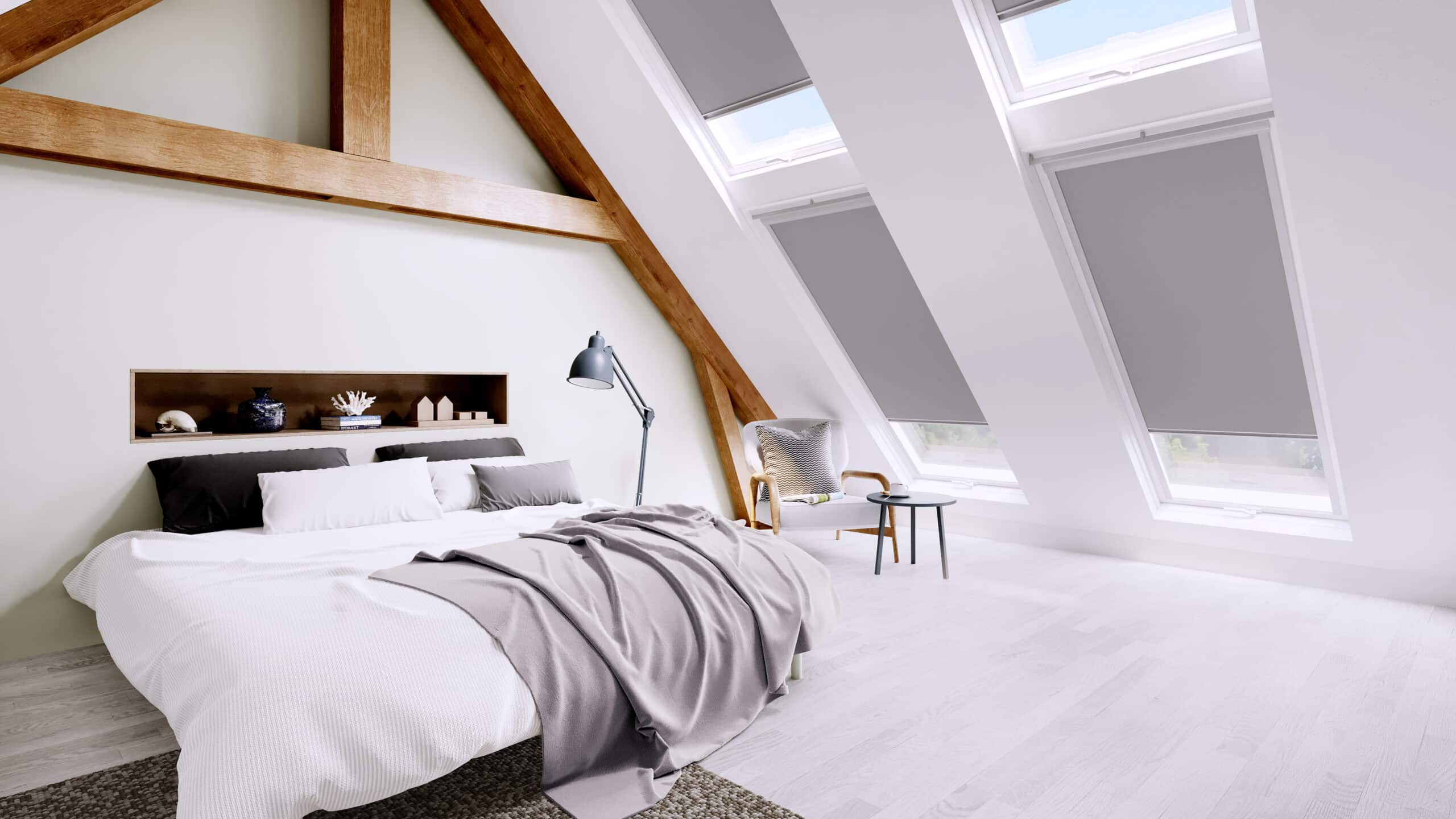
Yes, when they are closed, blinds can reduce heat loss through a window.
Independent testing carried out at the University of Salford’s Energy House Labs for the British Blind and Shutter Association found measurable reductions in heat loss across several types of blinds and shutters on a modern double-glazed window.
The strongest results in that test came from close-fitting systems. A roller blind with zipped side channels reduced heat loss through the test window by up to 33%, while a framed honeycomb blackout blind achieved up to 32%. Internal plantation shutters achieved up to 28%.
A standard roller blind also reduced heat loss, although by a smaller amount.
Those figures relate to heat loss through the window itself, not a percentage reduction in your total household energy bill. In a real home, performance will depend on the size and condition of the glazing, the blind specification and how consistently it is used.
The practical takeaway is straightforward: the closer and more insulating the blind is, the more useful it is likely to be during colder weather.
Which Blinds Are Best for a Cold Conservatory?
Honeycomb and Pleated Thermal Blinds
Honeycomb blinds are one of the strongest options where insulation is a priority.
Their cellular structure traps pockets of air inside the fabric. That trapped air provides another layer between the room and the glazing, helping to slow heat transfer.
They are particularly useful for conservatories because they can often be fitted neatly to individual panes and roof sections without making the room feel heavy or enclosed.
For homeowners who still want plenty of daylight during the day, they also stack away relatively neatly when open.
Close-Fitting or Frame-Fitted Blinds
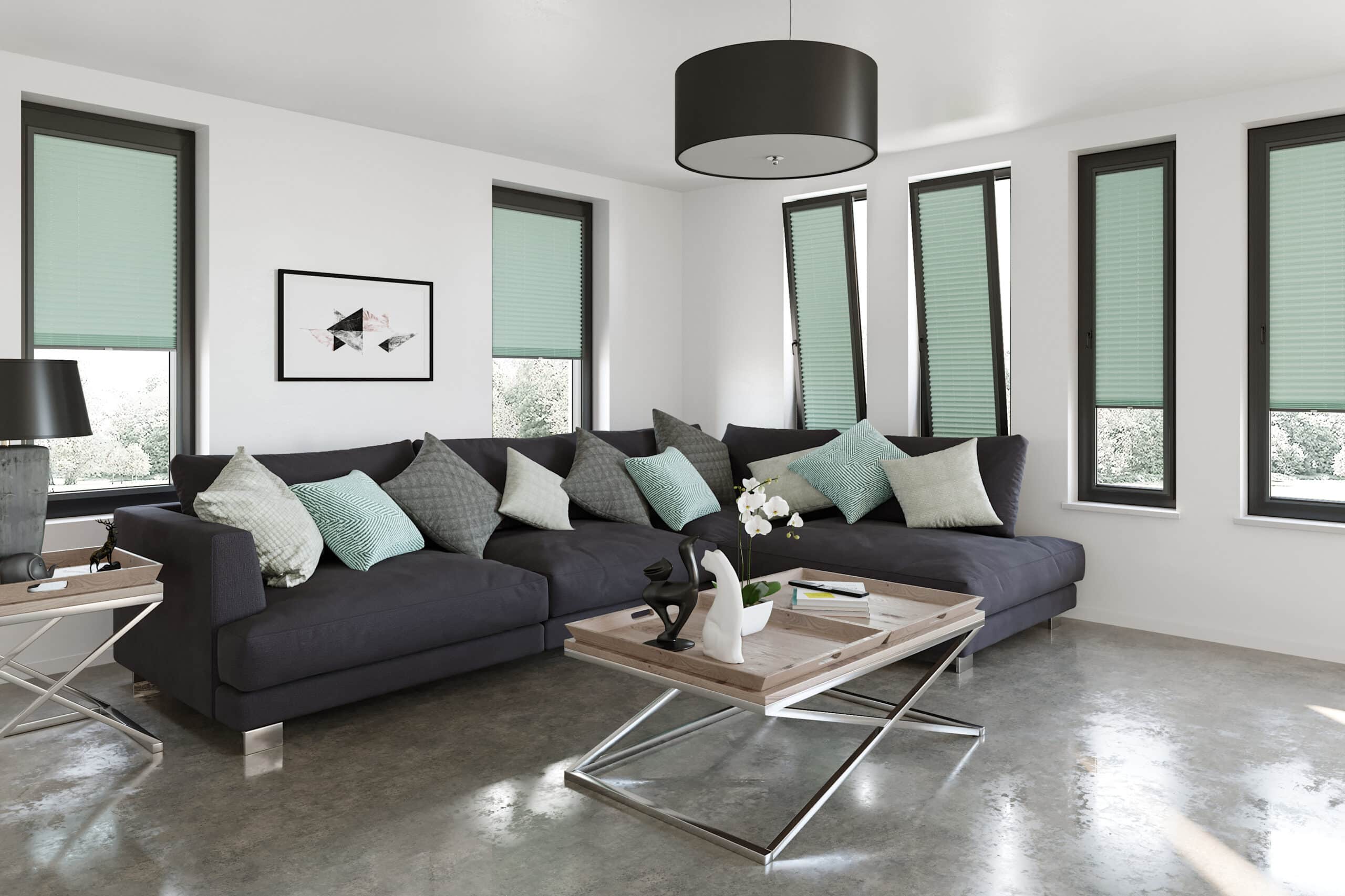
The gaps around a blind matter.
A blind that sits closely within or against the window frame can generally create a more effective barrier than a loose covering positioned well away from the glass.
Frame-fitted systems such as Perfect Fit-style blinds can be particularly attractive for conservatory doors and windows because they move with the frame and keep the finish tidy.
They can also be a good option where you want a clean, contemporary look without lots of visible cords or hardware.
Thermal Roller Blinds
Roller blinds remain a simple and versatile choice.
With the right thermal or blackout fabric, they can add useful insulation while also controlling glare and privacy.
They are particularly practical on straightforward window shapes and can work well as part of a wider conservatory scheme, although a standard free-hanging roller blind will normally leave more air movement around the edges than a tightly framed system.
Conservatory Roof Blinds
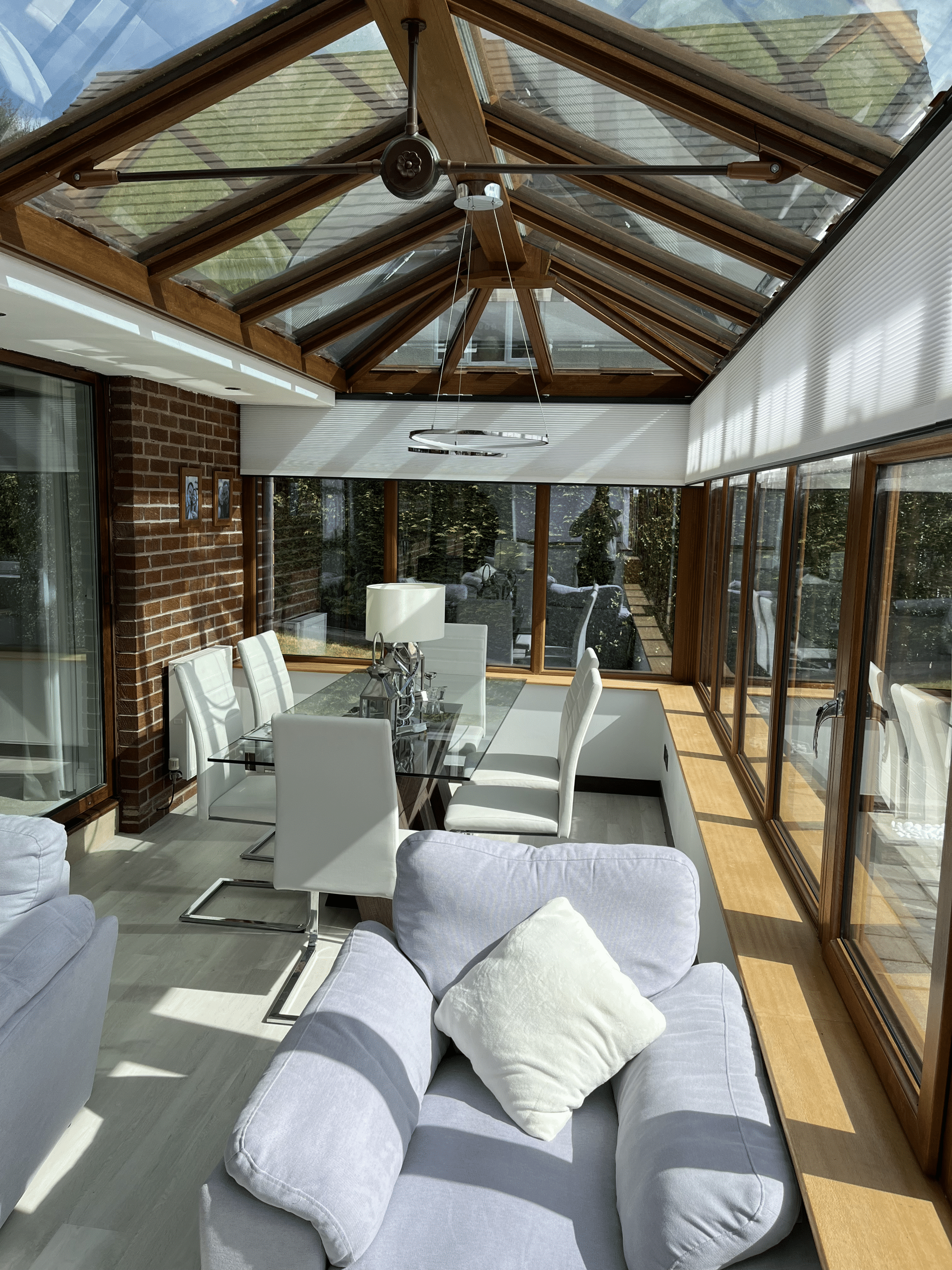
Do not overlook the roof.
In a glass-heavy conservatory, the roof represents a large area through which temperature can change. Purpose-made roof blinds can therefore be particularly valuable when the aim is to make the room more comfortable throughout the year.
The same blinds can help in both directions: retaining warmth during colder periods and reducing excessive solar heat in summer.
This is one reason bespoke conservatory blinds are usually a better solution than simply treating the side windows and leaving the roof exposed.
Can Shutters Help Keep a Room Warmer Too?
Yes.
Well-fitted internal shutters create another layer between the room and the glass. In the same Energy House testing referenced above, internal plantation shutters reduced heat loss through the test window by up to 28%.
Shutters are more commonly chosen for standard windows, bays and doors than for a full glazed conservatory roof, but they can be an excellent option where a conservatory or adjoining room includes conventional windows.
They can also suit Scottish period properties particularly well, giving you insulation, privacy and light control without covering the architectural shape of the window with heavy fabric.
How to Use Blinds in Winter for the Best Results
Choosing the right blind is only part of the story. How you use it matters too.
On a bright winter day, open your blinds to let sunlight into the room. That free solar gain can help warm the space naturally.
As the light fades and the outdoor temperature drops, close the blinds before the room loses too much heat through the glazing.
A simple winter routine is:
- Open blinds during sunny daylight hours.
- Close them at dusk.
- Keep them closed overnight.
- Open them again in the morning once there is useful daylight.
For a conservatory that is only used at certain times, motorised or smart blinds can make this easier, particularly where roof sections are difficult to reach.
Will Thermal Blinds Stop Condensation?
They can help improve comfort around cold glazing, but blinds are not a cure for condensation.
Condensation occurs when warm, moisture-laden indoor air meets a sufficiently cold surface. Insulating window coverings can change the temperature around the glazing, but ventilation and indoor humidity are also important.
If condensation is a persistent problem, it is worth looking at airflow, heating and moisture levels as well as the window covering itself.
What About Existing Double Glazing?
Thermal blinds can still be worthwhile with double glazing.
The Energy House testing was carried out on a modern double-glazed low-emissivity window, and every blind or shutter tested reduced heat loss compared with the same window left uncovered.
So the choice is not necessarily between good glazing or good blinds. The two can work together.
For a conservatory, where the sheer amount of glass is often the issue, adding a well-fitted blind can still make a noticeable difference to comfort.
The Best Solution Depends on the Conservatory
There is no single blind that is best for every conservatory.
A large glazed roof may need a different system from French doors or individual side windows. Privacy, glare, motorisation and the way the room is used all affect the recommendation.
At Hamptons Blinds & Shutters, we measure each space individually and recommend a solution based on the windows, the room and how you want to use it.
For homes across Glasgow, Bearsden, Edinburgh and Central Scotland, that might mean thermal pleated blinds, frame-fitted blinds, specialist roof blinds, blackout options or a combination of different products.
Make Your Conservatory More Usable This Winter
If your conservatory becomes a room you avoid as soon as the temperature falls, the right blinds can help make it more comfortable and practical throughout the colder months.
They will not turn poor glazing into a fully insulated wall, and we would never suggest that a blind alone can transform a building’s overall energy performance.
What a good made-to-measure system can do is reduce heat loss through the glazing, improve privacy and glare control, and make the space feel much more usable.
Hamptons Blinds & Shutters provides free home consultations and made-to-measure blinds throughout Glasgow, Bearsden, Edinburgh and Central Scotland.
Speak to our team and we can recommend the best blind configuration for your conservatory, windows and budget.